
Winterizing Your Storage Unit:
Before a Panhandle Freeze

A Panhandle freeze can sneak up fast, and a little prep now keeps your stored belongings safe until spring. Anyone who’s lived in Lubbock knows the drill: it’s 70 degrees on Tuesday, and by Thursday a blue norther blows through with sleet, wind, and temps in the teens.

Those quick swings are tough on stored items, especially electronics, liquids, and anything that doesn’t like moisture. The good news is that winterizing your storage unit doesn’t take long or cost much. A few smart steps will protect your stuff and help you get the most out of your cheap storage all season long.

How a Panhandle Winter Affects Stored Belongings

Cold on its own isn’t the biggest threat. The real trouble comes from freezing, fast temperature swings, and the moisture they create.

  • Freezing liquids expand. Anything water-based can burst its container and leak onto everything nearby.
  • Condensation forms during warm-ups. When a cold snap is followed by a sunny afternoon, moisture can collect on metal, glass, and plastic surfaces. Over time that leads to rust, mildew, and warped wood.
  • Cold makes materials brittle. Plastics, vinyl records, and some finishes can crack if they’re bumped or handled while frozen.
  • West Texas wind finds every gap. Dust and grit blow in with winter fronts, so anything left uncovered tends to get a gritty coat by spring.

What to Take Home and What Can Stay

Most household items handle a Lubbock winter just fine in a drive-up unit. A few things are better off coming home until the weather warms up.

Take Home for the Winter Fine to Leave (With a Little Prep)
Paint, cleaning supplies, and other liquids Furniture, wrapped and off the floor
Canned goods and bottled drinks Clothing and linens in sealed plastic bins
Laptops, TVs, and sensitive electronics Holiday decorations and seasonal gear
Photos, important papers, and keepsakes Tools and yard equipment, cleaned and lightly oiled
Musical instruments Bikes, sports equipment, and camping gear
Candles, glass, and anything that cracks when frozen Boxed books and kitchenware

Storing a vehicle, mower, or other motorized equipment? See the checklist below for a few extra steps.

Your Storage Unit Winterizing Checklist
Set aside an hour before the first hard freeze and work through this list. Most of it uses supplies you already have at home.

  • Get everything off the floor. Set boxes and furniture on wooden pallets or plastic shelving so melting snow or condensation can’t soak in from below.
  • Swap cardboard for plastic bins. Cardboard soaks up moisture and weakens. Sealed plastic bins keep clothing, linens, and paperwork dry.
  • Cover furniture with breathable fabric. Old sheets or cotton drop cloths keep dust off while letting air move. Skip plastic wrap on wood and upholstery since it traps moisture.
  • Add moisture absorbers. A few moisture-absorbing tubs or silica packs tucked around the unit help with condensation during warm afternoons.
  • Drain anything with water in it. Empty hoses, pressure washers, coolers, and water jugs so they don’t crack.
  • Prep motorized equipment. Add fuel stabilizer to mowers and small engines, disconnect batteries if you can, and check that vehicles have the right antifreeze mix.
  • Leave a little airflow. Stack items a few inches away from the walls so air can circulate around them.
  • Check your lock. Cold can make cheap locks stiff. A quality disc lock holds up better and is harder to cut.
  • Put the things you’ll need on top or in front. If you’ll grab holiday decorations or winter gear, make them easy to reach so you aren’t digging around in the cold.
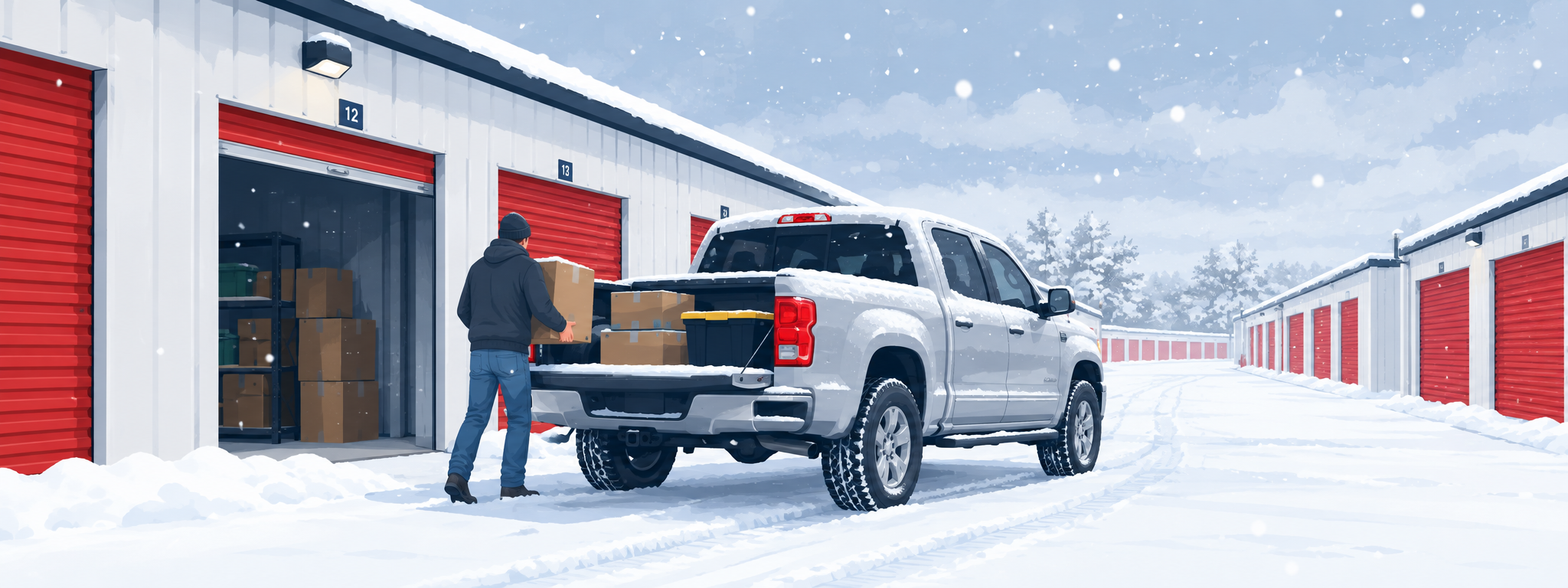
Person unloading boxes from a pickup truck at a storage unit in the snow

Visiting Your Unit When the Weather Turns

Drive-up access makes winter visits a lot easier, since you can park right at your door instead of hauling things down a cold hallway. A few habits make it even smoother.

Pick the warmest part of the day. Midday visits mean less ice on the ground and a door that rolls up more easily.

Check in after a big storm. A quick look after heavy wind or snow lets you catch anything that shifted or got damp before it becomes a problem.

Keep the door closed while you work. Rolling it most of the way down keeps wind and grit out while you're inside.

Plan around gate hours. Our gate is open 6:00am to 12:00am daily, so you have plenty of time to stop by around work and holiday plans.

Frequently Asked Questions

Do I need climate-controlled storage in Lubbock during winter?
For most household items, no. Furniture, clothing, tools, and seasonal decor do fine in a drive-up unit with the prep steps above. If you're storing fine art, antiques, or sensitive electronics long term, those are better kept at home.

Will my items freeze in a storage unit?
The inside of a non-climate-controlled unit follows outdoor temperatures, so yes, it can drop below freezing. That's why liquids and anything water-based should come home for the winter.

Should I wrap furniture in plastic for winter?
Not wood or upholstered pieces. Plastic traps moisture against the surface. Use breathable covers like cotton sheets or moving blankets instead.

Is it worth renting a storage unit just for the winter?
Absolutely. Our month-to-month rentals mean you can store patio furniture, lawn equipment, or a project car through the cold months and move out in spring without a long-term contract.

Get Ready for Winter at Storage in Lubbock

We’re locally owned right here in West Texas, so we know exactly what a Panhandle winter can throw at you. Our steel roll-up doors, paved drive lanes, and gated access keep your belongings secure through every norther, and our discounted month-to-month rates mean you get the best price in Lubbock without a long-term contract.

Need a unit before the first freeze? Reserve online in minutes, call us at (806) 866-4540, or stop by 7314 82nd St, Lubbock, TX. A real neighbor will help you find the right fit.